

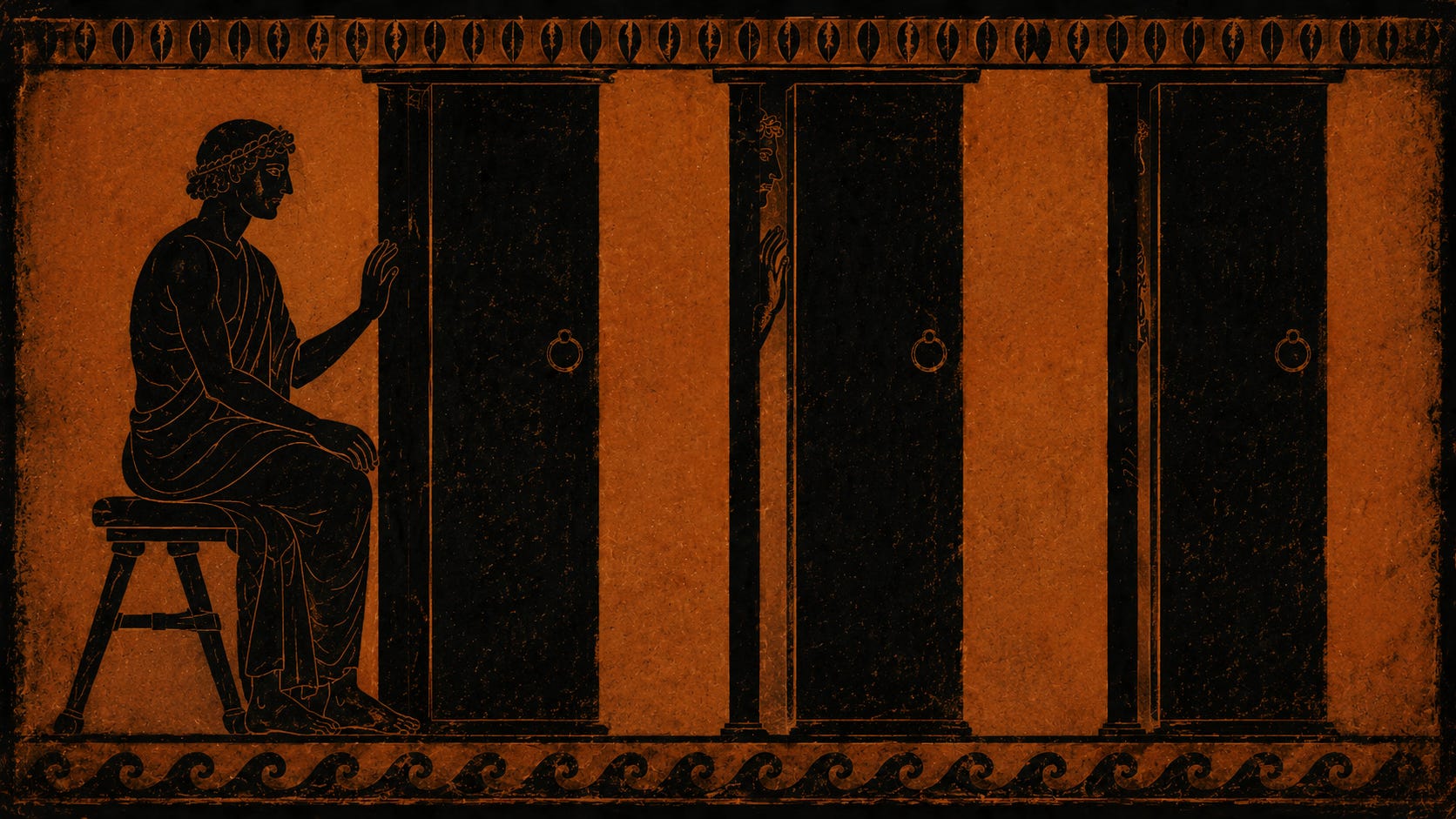
The difficulty with Tithonus was not finding the ending.
It was that the myth had already taken the ending away.
A story normally gathers pressure by approaching something: a death, a recognition, a return, a transformation, a door that will finally open or close. Tithonus is denied precisely that movement. Zeus has not made him invulnerable. He has done something stranger. He has removed the event towards which ageing ordinarily tends.
The first draft understood much of this. It had the shrinking rooms, the weakening body, the unchanged Dawn, the shining doors. It even contained the sentence that would eventually reveal the architecture to me:
A god awakens into continuance.
A mortal awakens having spent another night of what has been given.
What the draft did not yet understand was how the reader should experience that difference.
I could make Tithonus older. I could make his world smaller. I could take away his strength, his movement, his speech.
But if the narrator continued to know him completely, something essential would remain untouched.
The story would describe his disappearance without making us lose him.
The obvious correction was point of view.
I could lock the whole tale to Eos. That would remove the loose access to Tithonus and give the story a clean formal discipline.
It would solve the problem perfectly.
It would also destroy the loss.
